

Roof inspections in Hot Springs, AR should occur twice yearly and after major storms to detect leaks, assess shingle condition, and prevent costly repairs.

Dealing with roof damage is stressful enough without the confusion of insurance paperwork. Between filing a claim, meeting with an adjuster, and reviewing estimates, the process can feel overwhelming. The good news is—you don’t have to handle it alone. At Lake Hamilton Roofing , we help homeowners understand their roof damage, insurance claims, and next steps toward restoring their home. Why File an Insurance Claim? Homeowners insurance may help cover roof damage caused by sudden events like: Wind or hail Storm damage Fallen trees or debris Normal wear and tear or age-related issues are usually not covered. A professional inspection can help determine if filing a claim makes sense. How to Start a Claim If you suspect storm damage: Schedule an inspection Take photos of visible damage Note the date of the storm or event Schedule a roof inspection Contact your insurance company to file a claim They may ask for your policy number, damage details, and photos. Once filed, you’ll receive a claim number and possibly an adjuster inspection. Filing a claim does not guarantee approval—coverage depends on your policy and the insurer’s review. What Happens After Filing Your insurance company will inspect the damage and send an estimate or scope of loss . This document explains what they are willing to cover. A roofing contractor can help you review it and compare it to what your roof actually needs. Key Parts of Your Insurance Estimate Scope of Work Lists what is included, such as shingles, underlayment, flashing, vents, and labor. Replacement Cost Value (RCV) The estimated full cost to repair or replace the roof before deductions. Actual Cash Value (ACV) The amount after depreciation and adjustments—often the first payment you receive. Depreciation A reduction based on age and condition. Some policies allow you to recover this after work is completed. Deductible The amount you are responsible for paying out of pocket. What an Approved Claim Means An approved claim means the insurer agrees certain damage is covered. It should outline: Approved repairs Estimated costs Deductible Depreciation Payment details Even with approval, it’s important to confirm the scope fully matches your roof’s needs. Using Your Claim for Roof Replacement Why Homeowners Choose Lake Hamilton Roofing We are a local roofing company focused on quality workmanship and honest guidance. We help homeowners understand their insurance paperwork and complete their roofing project with confidence. Our work is built on quality hand-nailed installation, attention to detail, and trusted service from start to finish. Don’t Let Insurance Paperwork Stress You Out Start with a roof inspection, understand your damage, and review your estimate with a professional you trust. At Lake Hamilton Roofing, we’re here to help you every step of the way—from inspection to final installation. Need help with your roof or insurance claim? Contact us today. 📞 501-229-5034 📧 admin@lakehamiltonroofing.com 🌐 lakehamiltonroofing.com 📍 248 Amity Rd., Hot Springs, AR 71913
Storm damage restoration in Lake Hamilton, AR requires prompt assessment, proper documentation, and coordinated repairs to prevent secondary damage and insurance issues.
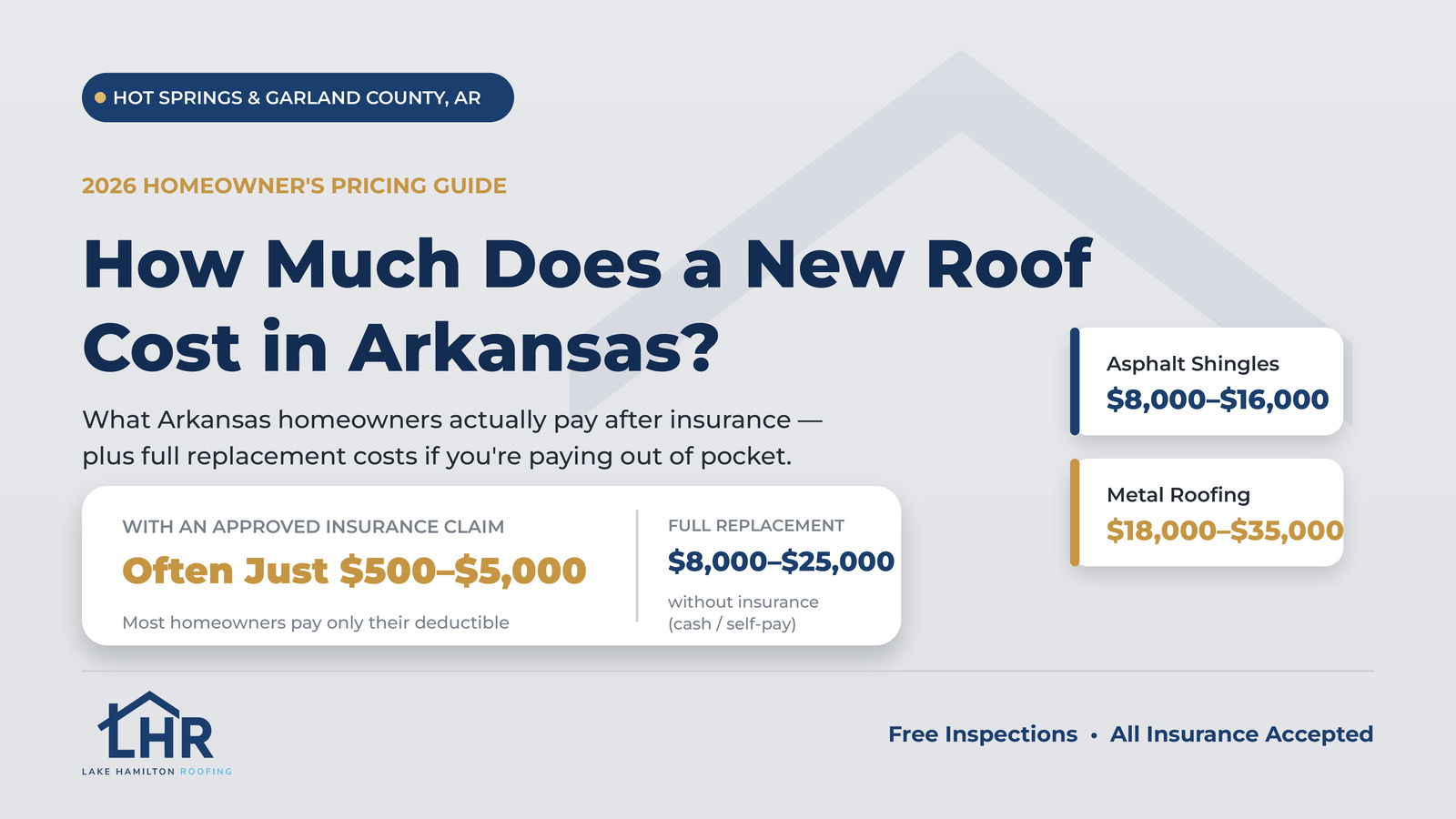
How Much Does a New Roof Cost in Arkansas in 2026? A Homeowner's Guide A new roof is one of the biggest checks most homeowners will ever write. It's also one of the most confusing — quotes can swing by tens of thousands of dollars depending on who you call, and it's not always clear why. Here's the short answer, then the full breakdown of what actually drives the price. The Short Answer With an approved insurance claim, most Lake Hamilton Roofing homeowners pay only their deductible — typically $500 to $5,000 — not the full cost of the roof. That's the number that matters for most homeowners in Hot Springs and Garland County, because most "I need a new roof" situations here trace back to hail or wind damage insurance is designed to cover. If you're paying entirely out of pocket — no insurance claim involved — a full roof replacement in Arkansas typically runs $8,000 to $25,000, with most mid-size homes landing in the $9,000 to $16,000 range for standard architectural shingles. The gap between those two numbers is exactly why a free inspection is worth doing before you assume you're on the hook for the bigger figure. What Actually Drives the Price Roof size. Roofers price by the "square" — a 10-foot by 10-foot section, or 100 square feet. A 2,000-square-foot roof is roughly 20 squares. Size is the single biggest factor in your total cost, full stop. Material. This is where the range really opens up: - 3-tab asphalt shingles $6,500 – $10,000 15–20 years - Architectural (dimensional) shingles $8,000 – $16,000 25–30 years - Premium designer shingles $12,000 – $22,000 Up to 50 years - Exposed-fastener metal $10,000 – $18,000 30–40 years - Standing seam metal $18,000 – $35,000+ 40–60+ years Architectural shingles from brands like GAF, Owens Corning, and CertainTeed make up the large majority of Arkansas roof replacements. They hold up well against our wind and hail, carry solid warranties, and hit a comfortable price point for most homeowners. Pitch and complexity. A steep roof, or one with a lot of valleys, hips, dormers, and chimneys, takes longer to work on safely and uses more material for flashing and waste. Complex roofs can run up to 30% more than a simple, low-slope roof of the same size. Tear-off and disposal. Removing your old roof typically adds $1 to $3 per square foot. If you've already got two or three layers of shingles up there, expect that number to land on the higher end. Labor. Arkansas labor rates run lower than most of the country — our region's construction costs sit well below the national average. That's part of why Arkansas homeowners often get more roof for their dollar compared to other states. Permits. Most Arkansas municipalities require a permit for a full roof replacement. Fees are modest — usually under $200 — and a good contractor handles the paperwork for you. A Real-World Example Take a typical 2,000-square-foot single-story home in Garland County with a moderate pitch and architectural shingles: Tear-off and disposal: ~$1,500 Materials (shingles, underlayment, flashing, ridge vent): ~$6,000 Labor and installation: ~$4,000 Permit: ~$150 Total: roughly $11,500–$12,500 — right in the middle of what most homeowners around here actually pay. The Insurance Factor Here's what changes the math entirely: if your roof damage came from a covered event — hail, high wind, a fallen limb — your homeowner's insurance policy may pay for some or all of the replacement. Your out-of-pocket cost typically comes down to your deductible, most often $500 to $5,000 depending on your policy. Hot Springs and Garland County see enough hail and wind activity most years that a lot of "I need a new roof" situations are actually "insurance owes me a new roof" situations. Homeowners just don't always know it, because storm damage often isn't visible from the ground. That's the whole reason a professional inspection matters before you assume you're paying full price out of pocket. The Process, Start to Finish Free inspection. A trained eye gets on the roof, checks the field shingles, flashing, and accessories, and documents anything a homeowner wouldn't catch from the driveway. Honest report. You get a clear rundown — what's damaged, what's just wear, and what your real options are. No pressure, no guesswork. Insurance claim, if applicable. If the damage is storm-related, we help you file and meet the adjuster on-site so nothing gets missed or underpaid. Written estimate. A detailed quote — material, labor, tear-off, everything — so there are no surprises on install day. Material order and scheduling. Once approved, materials are ordered and a firm install date is set, usually within a couple of weeks depending on the season. Install day. Most residential roofs are torn off and replaced in a single day. Larger or more complex roofs may take two. Final walkthrough and cleanup. A full property sweep for nails and debris, plus a final inspection before we call the job done. Budgeting for a New Roof If you're paying out of pocket rather than through insurance, a few things help make the cost more manageable: Get a written, itemized quote — not just a total number — so you know exactly what you're paying for. Ask about flexible payment options. Most reputable roofing companies, including ours, offer payment plans for homeowners covering the cost themselves. Time it right. Roofing demand (and pricing) tends to ease outside of peak storm-repair season. Don't skip the inspection just because you assume it's not storm-related. It costs nothing to find out, and it might save you from paying full price for something insurance would have covered. What to Watch Out For Bids that are dramatically lower than everyone else's. That usually means shortcuts on materials, underlayment, or proper flashing — corners that show up as leaks two years later. Contractors who want full payment up front. A deposit is normal. The full balance before the job is done is not. No local address or licensing. Storm season brings traveling crews from out of state. If something goes wrong under warranty, you want a company that's still around — and easy to find — next year. Bottom Line Most Lake Hamilton Roofing homeowners with an approved claim pay $500 to $5,000 — their deductible, not the full roof price. Without insurance, a full replacement typically runs $8,000 to $25,000 depending on size and material. Before you budget for either number, it's worth finding out which situation you're actually in — because a lot of Hot Springs roofs that "need replacing" are roofs insurance owes. Not sure which situation you're in? Schedule a free, no-obligation roof inspection and get a straight answer either way.
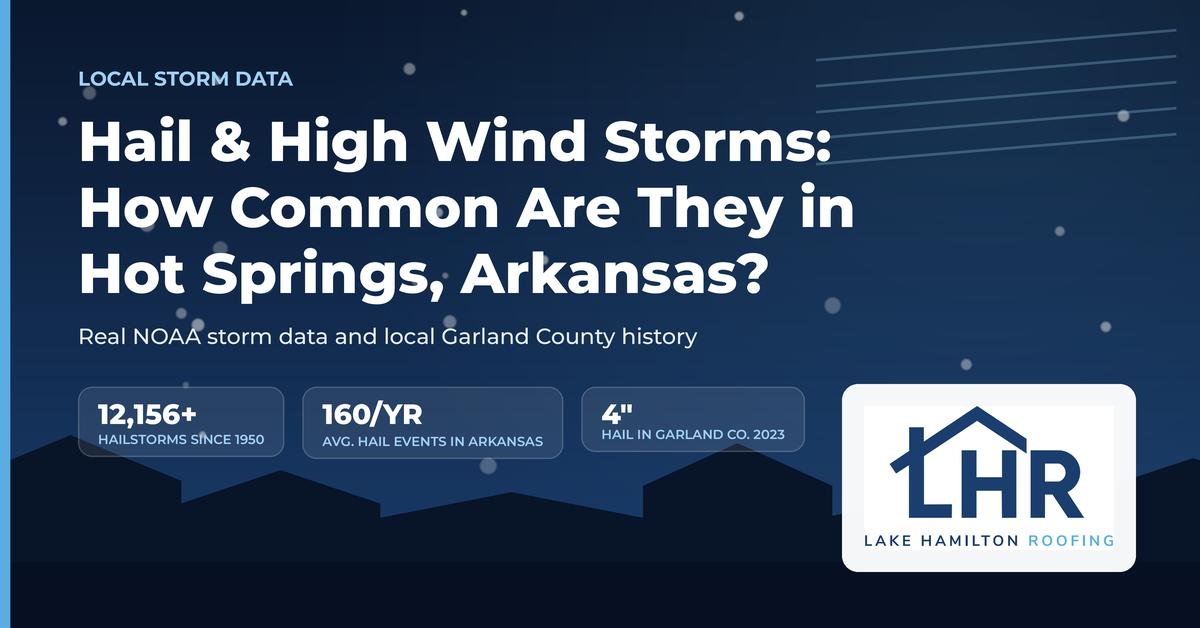
The Numbers Might Surprise You
How Often Should You Really Have Your Roof Inspected? A Hot Springs Homeowner's Guide Your roof does one job every single day: stand between your family and the weather. Most homeowners don't think about it until water shows up somewhere it shouldn't. By then, a problem that could have cost a couple hundred dollars to fix has turned into a five-figure repair — or a denied insurance claim. Here's what you actually need to know: how often to get your roof checked, what regular maintenance looks like, how quickly you need to move after storm damage in Arkansas, and how Lake Hamilton Roofing fits into all of it. How Often Should You Have Your Roof Inspected? The short answer: twice a year, plus after every major storm. The National Roofing Contractors Association recommends professional inspections in the spring and fall, with an additional check any time your area sees significant hail, high wind, or ice. That timing isn't arbitrary — spring inspections catch whatever winter weather did to your shingles and flashing before summer heat makes small problems worse, and fall inspections make sure your roof is sealed up tight before winter moisture and ice arrive. A few things that mean you should move up your next inspection instead of waiting for the calendar: Your roof is more than 10–15 years old You've had any hail or high-wind event in your neighborhood, even if your roof "looks fine" from the ground You've noticed granules collecting in your gutters, a shingle out of place, or a water stain on a ceiling You're buying or selling a home Most roof damage isn't visible from the driveway. Cracked flashing, lifted shingle tabs, and granule loss all show up on the roof itself — not from the yard — which is exactly why a walk-around glance from ground level isn't a substitute for someone actually getting up there. Regular Roof Maintenance: What It Actually Includes An inspection tells you what's wrong. Maintenance is what keeps small things from becoming big things in between inspections. A properly maintained roof routinely includes: Gutter cleaning — Clogged gutters back water up under your shingles and roofline, which is one of the most common (and most preventable) causes of rot and leaks. Debris removal — Leaves, branches, and pine needles trap moisture against the roof surface and accelerate wear. Moss and algae treatment — Left alone, these hold moisture against shingles and shorten their lifespan. Flashing checks — The metal around chimneys, vents, and skylights is where most leaks actually start, not the open field of shingles. Attic ventilation checks — Poor airflow traps heat and humidity, which can warp decking and shorten your roof's life from underneath. Sealant and caulking touch-ups — Small, inexpensive fixes around penetrations that prevent much larger repairs later. Tree trimming — Overhanging limbs scrape shingles in the wind and drop debris straight onto your roof. None of this is glamorous. But it's the difference between a roof that reaches its full lifespan and one that needs premature replacement. How Long Do You Have to File a Storm Damage Claim in Arkansas? This is the part most homeowners get wrong, and it can genuinely cost you money. Arkansas doesn't set a hard statutory deadline for when you must first report storm damage to your insurer — unlike some states that impose a strict one-year window. But "no state deadline" does not mean "no deadline." Your individual insurance policy almost always requires prompt or timely notice of a loss, and Arkansas courts have upheld insurers' right to deny claims when a homeowner waited too long to report known damage — even years, in cases where the delay was found unreasonable. In practical terms, here's what that means for your wallet: The clock starts when the damage happens or is discovered — not when you get around to calling. Waiting to file doesn't just risk denial; it also gives insurers room to argue that damage is due to ordinary wear and age rather than the storm. Depreciation works against you over time. The longer a roof sits damaged, the easier it is for an adjuster to attribute deterioration to age rather than the specific weather event, which can shrink or eliminate your payout. Documentation fades fast. Photos, chalk-marked hail hits, and a clear date of loss are far easier to establish right after a storm than months later. The safest move is simple: the moment you suspect storm damage, get a professional inspection and get the claim filed. This isn't legal advice, and every policy has its own specific notice requirements — it's worth a quick read of your own policy or a call to your agent for the exact language. But the pattern is consistent: homeowners who act quickly keep more of what they're owed, and homeowners who wait tend to lose leverage, coverage, or both. Lake Hamilton Roofing Is Here for Whatever Your Roof Needs Lake Hamilton Roofing has been protecting homes in Hot Springs and the surrounding Lake Hamilton area for years, and our approach hasn't changed: quality workmanship and hometown trust, not shortcuts. Whatever stage your roof is at, we handle it: 21-Point Roof Inspections — A full, documented evaluation of shingles, flashing, ventilation, gutters, and accessories, so you know exactly where your roof stands. Routine Maintenance — The ongoing care that extends your roof's lifespan and keeps small issues from turning into big ones. Emergency Roofing Needs — Storm damage, active leaks, or sudden problems that can't wait. Full Roof Replacement — Done right, with attention to detail down to hand-nailed installation. Repairs — Targeted fixes for damaged or aging sections without paying for a full replacement you don't need. Gutter Cleaning — Because a clean gutter system protects everything above and below it. If it's been more than six months since anyone has actually been on your roof, that's reason enough to have it looked at. And if you've had recent storm activity in your neighborhood, don't wait to find out what it left behind. Ready to have your roof checked out? Lake Hamilton Roofing 248 Amity Rd, Hot Springs, AR 501-229-5034 LakeHamiltonRoofing.com

Don't Miss Out on the Coverage You've Earned
Emergency roofing services in Benton, AR provide rapid response for storm damage, severe leaks, and structural issues with temporary repairs and tarping available 24/7.
Filing roof damage insurance claims in Malvern, AR involves prompt reporting, thorough documentation, adjuster coordination, and contractor liaison for successful reimbursement.
Gutter services in Hot Springs, AR include cleaning, installation, and maintenance to prevent water damage, protect foundations, and ensure efficient drainage year-round.